
Introduction
India’s T20 batting combination is always a major talking point, especially when two talented players compete for the same position. Ahead of the Afghanistan series, the debate around the opening spot has gained attention, with Sanju Samson and young sensation Vaibhav Sooryavanshi emerging as possible options.
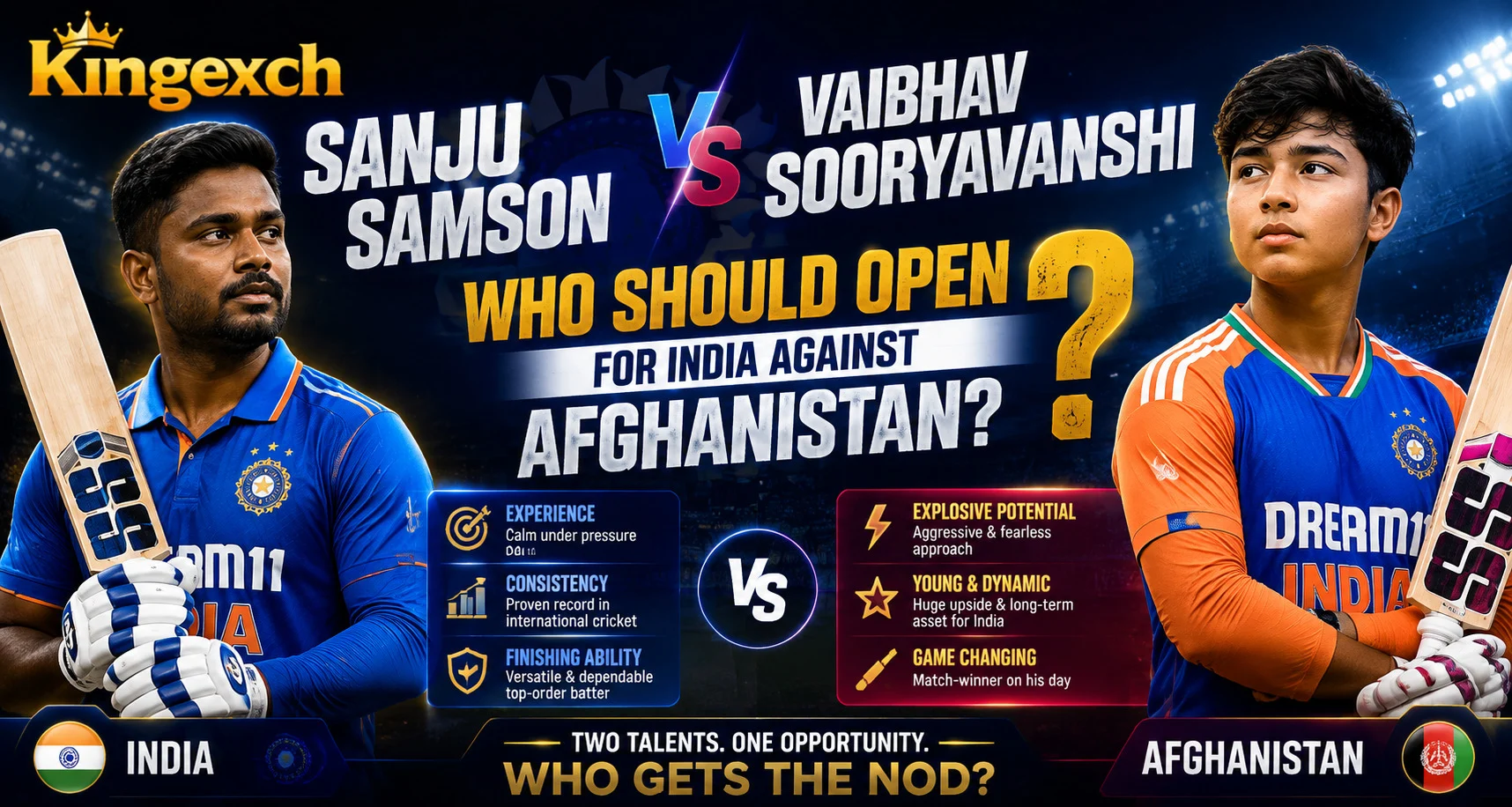
Both players bring different strengths to the top order. While Samson offers experience, adaptability, and years of international exposure, Sooryavanshi represents India’s next generation with fearless attacking ability.
For cricket followers tracking selection discussions through Kingexch, this opening combination debate highlights how India are balancing immediate results with future planning.
Sanju Samson’s Experience as an Opener
Sanju Samson has been part of India’s T20 setup for several years and has shown his ability to play different roles at the top of the order.
His biggest strengths include:
- Experience against international bowling attacks
- Ability to score quickly
- Strong stroke-making skills
- Adaptability across conditions
- Leadership experience
Samson has often impressed when given consistent opportunities. His ability to attack from the first over makes him a valuable option in T20 cricket.
Why Samson Could Be the Safer Choice
Opening in international cricket requires more than aggressive batting. Players need to handle pressure, understand match situations, and build innings when conditions are challenging.
Samson provides:
- Greater experience in pressure games
- Understanding of international conditions
- Ability to control the tempo
- Proven T20 ability
Against Afghanistan’s quality bowling attack, especially their spin options, experience at the top could be important.
Vaibhav Sooryavanshi’s Rising Profile
Vaibhav Sooryavanshi has quickly gained attention because of his fearless approach and impressive performances at a young age.
His key qualities include:
- Aggressive batting style
- Strong timing
- Ability to clear boundaries
- Confidence against pace bowling
- Fearless approach
Modern T20 cricket rewards players who can create impact immediately, and Sooryavanshi fits that attacking style.
Why Sooryavanshi Could Be an Exciting Option
Young players often bring unpredictability and energy to the team. Sooryavanshi’s natural attacking ability could give India explosive starts during the powerplay.
His potential advantages include:
- High scoring rate
- Positive intent
- Ability to put bowlers under pressure
- Long-term value for India
- Fresh approach
Giving opportunities to young players can also help India build depth for future tournaments.
Comparing Their Batting Styles
The biggest difference between Samson and Sooryavanshi is their approach.
Sanju Samson:
- More experienced
- Can play according to match situations
- Comfortable against different bowling styles
- Provides stability
Vaibhav Sooryavanshi:
- More aggressive mindset
- Looks to attack immediately
- Creates pressure on bowlers
- Offers future potential
The right choice depends on whether India want immediate reliability or long-term development.
Afghanistan’s Bowling Challenge
Afghanistan are known for their strong bowling attack, especially their world-class spin options. Opening against them requires careful planning.
India’s openers will need to handle:
- Quality spin in middle overs
- Variation in pace
- Pressure situations
- Different match conditions
The opening pair must provide both aggression and stability.
Possible Opening Combinations for India
India have several possible options depending on their strategy.
Possible combinations include:
- Samson with an experienced opener
- Sooryavanshi alongside an aggressive partner
- Samson providing stability while Sooryavanshi attacks
- Using match-specific combinations
The final decision may depend on pitch conditions and team balance.
What Should India Prioritize?
The selection decision should consider more than recent performances. India must evaluate role clarity and long-term planning.
Important factors include:
- Current form
- Team requirements
- Opposition strengths
- Player confidence
- Future tournament preparation
A player’s role should be clearly defined before entering the series.
The Long-Term View
India’s T20 future requires a balance between experienced performers and young talent. Samson can provide immediate value, while Sooryavanshi could become an important player for future campaigns.
The ideal approach may involve giving opportunities while maintaining stability in the playing XI.
For fans following discussions through King Exchange, this selection battle represents India’s broader challenge of managing talent and creating a strong T20 structure.
Conclusion
The Sanju Samson vs Vaibhav Sooryavanshi opening debate shows the depth of India’s T20 talent. Samson offers experience, maturity, and proven ability, while Sooryavanshi brings fearless attacking cricket and exciting future potential.
There is no simple answer because both players provide different advantages. If India want stability against Afghanistan’s bowling attack, Samson could be the preferred option. If they want to invest in explosive young talent, Sooryavanshi presents an exciting opportunity.
The final decision will depend on team strategy, conditions, and the role India want their opening pair to play.
FAQs
Who has more experience between Sanju Samson and Vaibhav Sooryavanshi?
Sanju Samson has significantly more international experience, while Vaibhav Sooryavanshi is a young talent making his mark.
Why is Vaibhav Sooryavanshi considered a future prospect?
His aggressive batting style, confidence, and ability to score quickly make him an exciting option for the future.
What advantage does Sanju Samson provide as an opener?
Samson provides experience, adaptability, and the ability to handle pressure situations at the international level.
Who should open for India against Afghanistan?
The decision depends on India’s strategy. Samson offers stability, while Sooryavanshi provides attacking potential.
Why is the opening position important in T20 cricket?
Openers face fielding restrictions and set the foundation for the team’s scoring rate during the powerplay.


