
Introduction
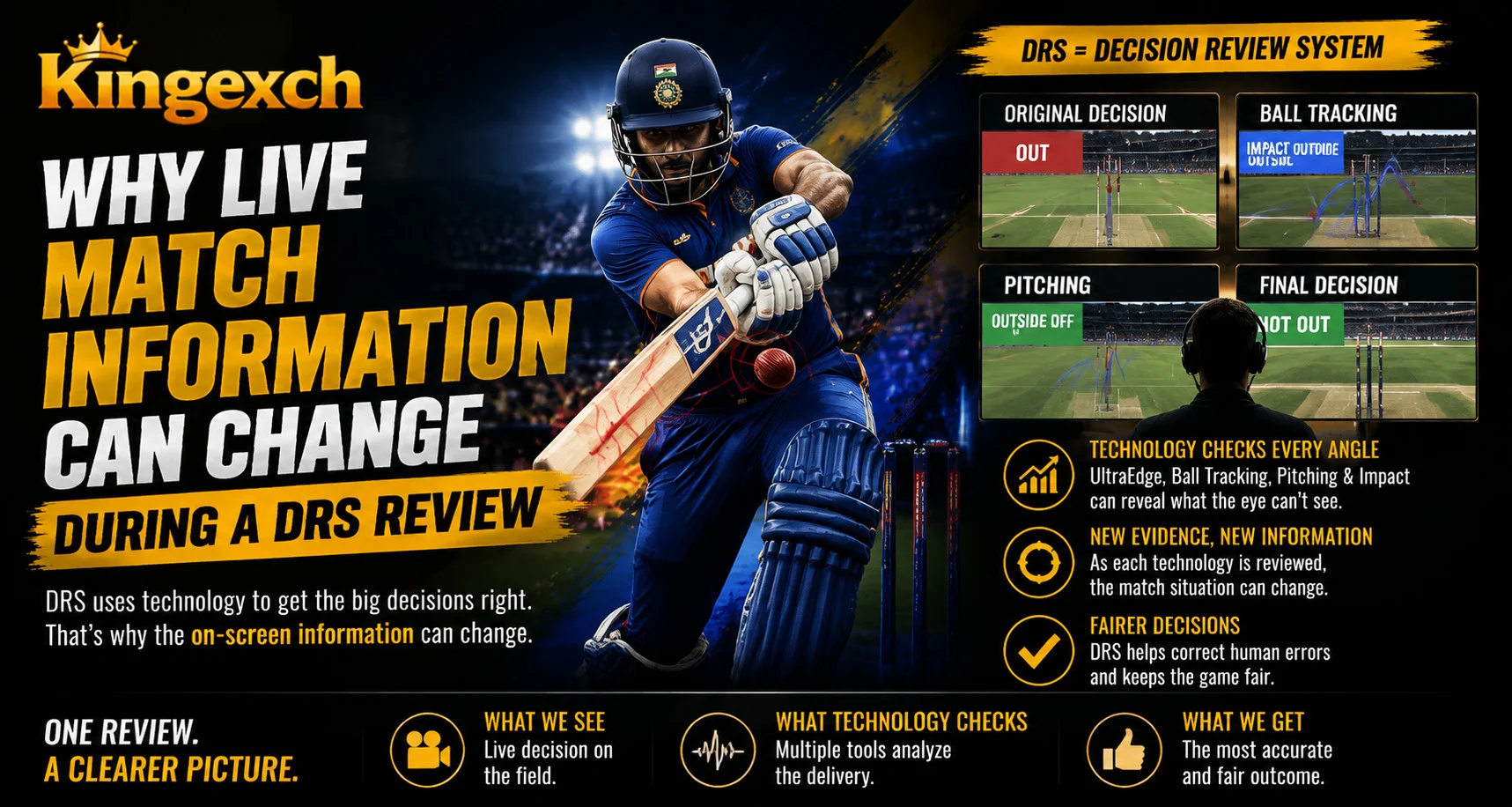
Live cricket information can change within seconds when a team uses the Decision Review System (DRS). A batter may initially be given out, but the decision can later be overturned after the third umpire examines available technology. During this short process, scorecards, player status, and match statistics may temporarily change.
For cricket followers using Kingexch, understanding how DRS works can make live match updates easier to interpret. A temporary score or wicket shown during a review should not always be treated as the final result until the third umpire announces the decision.
What Is DRS in Cricket?
The Decision Review System allows teams to challenge certain on-field decisions. The third umpire then examines available evidence before confirming or changing the original decision.
Depending on the incident, officials may examine:
- Replay footage
- Ball-tracking technology
- Edge-detection technology
- Slow-motion video
- Other approved broadcast evidence
The objective is to provide the officials with additional information before reaching a final decision.
Why Live Information Changes During a Review
When an umpire initially gives a batter out, a live score provider may record the wicket immediately. However, that information can be temporary while the review is taking place.
The sequence can look like this:
- The on-field umpire gives a decision.
- A team requests a review.
- The third umpire examines the evidence.
- The original decision is confirmed or overturned.
- The official score is updated.
This is why a live score can briefly show a wicket before changing back to not out.
How LBW Reviews Affect the Score
LBW decisions are among the most common situations reviewed using DRS. Ball-tracking technology can help officials assess where the ball pitched, where it struck the batter, and whether it would have hit the stumps.
If the technology shows that the ball would have missed the stumps, an original LBW decision can be overturned.
That can affect:
- Wicket count
- Batter status
- Individual score
- Partnership statistics
- Bowling figures
The final scorecard should reflect the confirmed decision rather than the temporary information.
Caught-Behind Decisions Can Also Change
Reviews involving edges can produce similar changes. A batter may initially be given out, but technology and replay footage can help determine whether the ball actually touched the bat.
If there is no confirmed contact, the batter can be given not out.
This can create a short period where live information appears different from the final result.
Why Scoreboards Can Take Time to Update
Live cricket information comes through multiple systems. The on-field decision, third-umpire review, broadcast graphics, and digital scorecard may not update at exactly the same moment.
A short delay can occur between:
- Original decision
- Review process
- Final announcement
- Scoreboard correction
- Statistical update
Therefore, a temporary difference does not necessarily mean the information is inaccurate.
Why Official Confirmation Matters
During a DRS review, fans may see immediate reactions on social media or unofficial score feeds. However, these sources can sometimes report the original decision before the review has finished.
Fans should wait for confirmation from reliable sources such as:
- Official match scorecards
- Tournament websites
- Recognized cricket broadcasters
- Official team channels
- Trusted cricket news platforms
For users following live cricket through King Exchange, waiting for the final decision can prevent unnecessary confusion.
DRS Can Change Match Momentum
A DRS decision can have a major impact on the direction of a match. A successful review may save a key batter or provide a crucial breakthrough.
The result can influence:
- Team confidence
- Bowling plans
- Field placements
- Partnership momentum
- Match pressure
For example, saving a well-set batter through a successful review may allow a team to rebuild an innings. Conversely, overturning a not-out decision can create an important breakthrough.
Common Mistakes When Following DRS
Fans can sometimes react too quickly to preliminary information.
Common mistakes include:
- Treating the original decision as final
- Assuming a temporary wicket is confirmed
- Sharing unverified updates
- Ignoring the final third-umpire announcement
- Relying entirely on social media
The best approach is to follow the review until the official outcome is announced.
How DRS Supports Better Match Understanding
DRS adds another layer to live cricket. Instead of relying solely on an umpire’s initial view, officials can use technology to examine important details.
For fans, understanding the process helps explain why:
- A wicket can disappear
- A batter can return to the crease
- The score can change
- Partnership statistics can be restored
- Bowling figures can be corrected
These updates are part of the normal DRS process.
Conclusion
Live match information can change during a DRS review because the initial on-field decision is not necessarily the final outcome. The third umpire examines available evidence before confirming or overturning the decision, after which scoreboards and statistics are updated.
Small delays between the review, official announcement, and digital scorecard can make information appear inconsistent for a short time. Fans who understand this process can follow matches more accurately and avoid reacting to preliminary updates.
DRS has become an important part of modern cricket, combining technology with on-field decision-making while adding another layer of excitement to live matches.
FAQs
Why can a wicket disappear during a DRS review?
A wicket can disappear if the third umpire overturns the original dismissal decision after reviewing the available evidence.
Is the original decision final during DRS?
No. The original decision can be confirmed or overturned after the review is completed.
Why does the live score sometimes take time to update?
Different systems may receive and process the final decision at slightly different times, creating a short delay.
What technology is used during DRS?
Depending on the decision, officials can use replay footage, ball tracking, and edge-detection technology to assess the incident.
What should fans do when a DRS decision is pending?
Fans should wait for the official third-umpire announcement before treating the decision, score, or wicket status as final.


