
Introduction
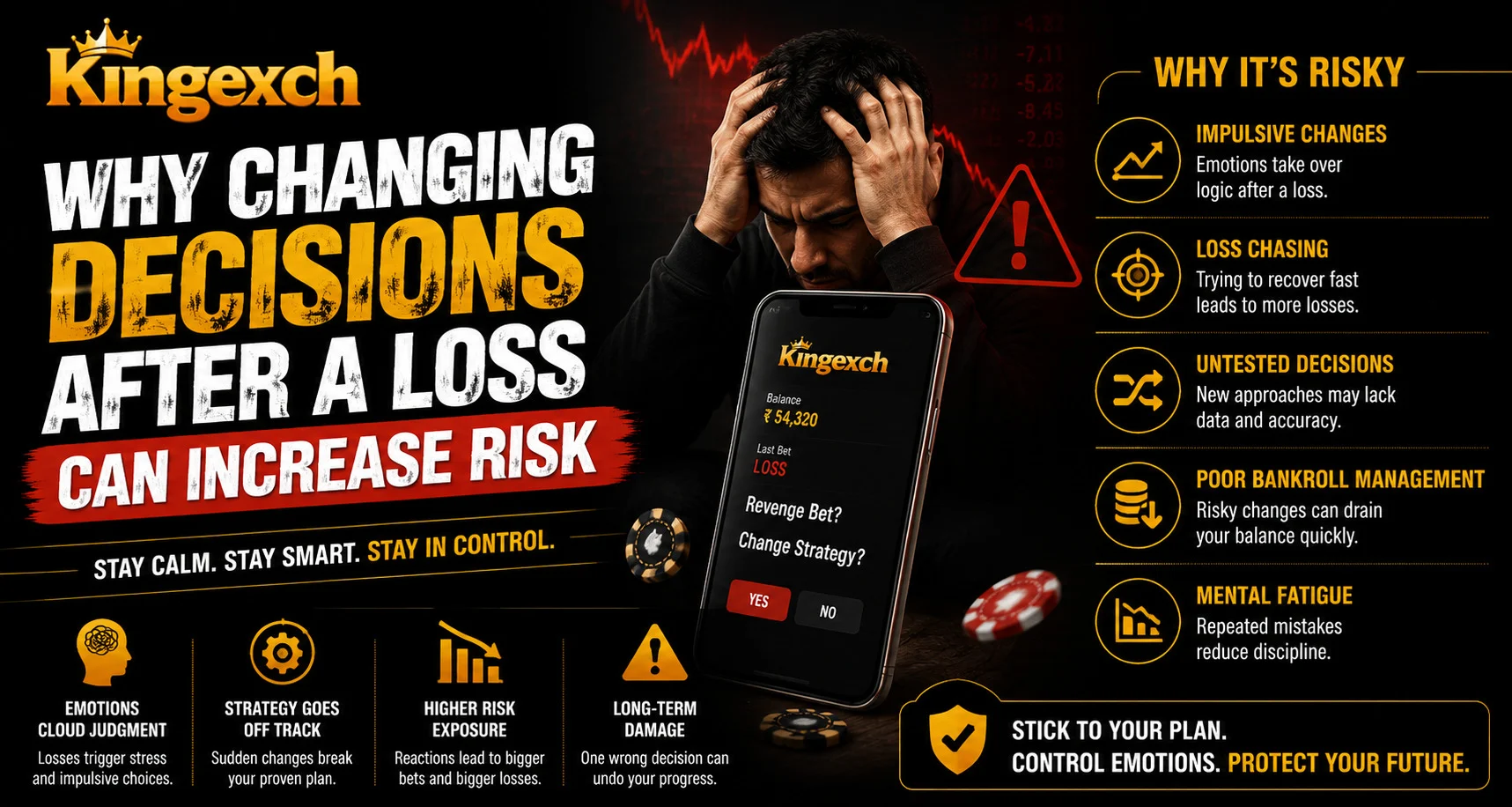
Losses are a normal part of many decision-making processes, but the reaction after a loss often determines whether a situation improves or becomes more difficult. Many people make quick changes immediately after an unsuccessful outcome, hoping to recover quickly or avoid another setback.
However, changing decisions emotionally after a loss can increase risk instead of reducing it. A better approach involves reviewing the situation calmly, understanding what happened, and making informed adjustments.
For users following decision-based activities through Kingexch, understanding the difference between thoughtful changes and emotional reactions can help create a more balanced approach.
Why People Change Decisions After a Loss
A loss can create strong emotional reactions. People naturally want to correct mistakes quickly and avoid repeating the same outcome.
Common reasons for changing decisions include:
- Frustration after failure
- Desire to recover quickly
- Fear of another loss
- Lack of patience
- Overconfidence in a new approach
These reactions can lead to decisions based on emotions rather than facts.
The Problem With Emotional Decision-Making
Making decisions immediately after a loss can reduce objectivity. Instead of analyzing the original plan, people may focus only on the negative result.
Emotional decisions can cause:
- Unnecessary changes
- Poor risk assessment
- Repeated mistakes
- Loss of discipline
- Lack of long-term planning
A single unsuccessful outcome does not always mean the original decision was incorrect.
Why One Loss Does Not Always Mean a Bad Strategy
Results should always be viewed in context. Even a well-planned decision can have an unexpected outcome because of changing conditions.
Before changing a strategy, consider:
- Was the original decision based on good information?
- Were external factors involved?
- Was the outcome expected to happen sometimes?
- Did the process remain logical?
A negative result does not automatically prove that the approach failed.
The Risk of Trying to Recover Quickly
One common mistake after a loss is making bigger changes to compensate immediately. This often creates additional risk.
Examples include:
- Increasing exposure without analysis
- Making rushed choices
- Ignoring previous planning
- Abandoning a working method
Quick recovery attempts can turn one problem into multiple problems.
Importance of Reviewing Decisions Calmly
A proper review helps identify whether a change is actually necessary. Instead of reacting emotionally, people should analyze the complete situation.
A useful review process includes:
- Understanding what happened
- Checking available information
- Identifying mistakes
- Measuring possible improvements
- Planning the next step
This approach helps create better decisions over time.
Difference Between Learning and Overreacting
Making adjustments after a loss is not always wrong. Improvement requires learning from mistakes. The key difference is whether the change is based on analysis or emotion.
A useful adjustment:
- Addresses a clear weakness
- Uses new information
- Improves future decisions
- Maintains reasonable risk
An emotional reaction:
- Happens immediately
- Focuses only on the loss
- Ignores previous success
- Creates unnecessary changes
Understanding this difference is important for better decision-making.
How Data Can Support Better Choices
Data provides a more reliable foundation than emotions. Reviewing facts and patterns can help determine whether a change is needed.
Useful information may include:
- Previous outcomes
- Performance trends
- Current conditions
- Risk levels
- Long-term results
For users following analysis through King Exchange, focusing on verified information rather than short-term emotions can support better judgement.
Setting Clear Limits Before Making Decisions
One effective way to avoid emotional reactions is creating clear boundaries in advance.
Helpful practices include:
- Defining acceptable risk
- Creating a review process
- Avoiding sudden changes
- Maintaining realistic expectations
- Tracking decisions
Preparation helps people remain disciplined during difficult moments.
Why Patience Matters After a Loss
Successful decision-making often requires patience. A single outcome represents only one moment, not the complete picture.
Patience allows people to:
- Evaluate situations properly
- Avoid unnecessary reactions
- Learn from experience
- Improve gradually
- Maintain consistency
Long-term thinking usually produces better results than short-term emotional responses.
Common Mistakes After a Loss
Many poor decisions happen because people focus only on immediate recovery.
Common mistakes include:
- Changing strategies too frequently
- Ignoring previous results
- Making decisions without research
- Increasing risk unnecessarily
- Following emotions instead of facts
Avoiding these mistakes can improve decision quality.
Responsible Decision-Making Practices
A disciplined approach helps reduce unnecessary risk.
Good practices include:
- Review before changing plans
- Use reliable information
- Understand possible outcomes
- Maintain realistic expectations
- Avoid emotional reactions
Every decision should be based on careful thinking rather than frustration.
Conclusion
Changing decisions after a loss is not always harmful, but making changes without proper analysis can increase risk. Emotional reactions often lead to rushed choices that may create bigger problems.
The best approach is to review what happened, identify genuine areas for improvement, and make adjustments based on facts. Losses can provide valuable lessons when they are handled with patience and discipline.
By focusing on thoughtful decisions rather than immediate reactions, users can develop a more balanced approach and avoid unnecessary risks.
FAQs
Why do people change decisions after a loss?
People often change decisions after a loss because of frustration, fear, or the desire to recover quickly.
Is changing a strategy after a loss always wrong?
No. Changes can be useful when they are based on proper analysis and new information rather than emotions.
Why can emotional decisions increase risk?
Emotional decisions may ignore important facts and lead to rushed choices without proper evaluation.
How should someone review a decision after a loss?
They should examine the original plan, available information, external factors, and possible improvements before making changes.
How can people avoid making rushed decisions?
Setting clear limits, reviewing information calmly, and focusing on long-term goals can help avoid emotional decisions.


