
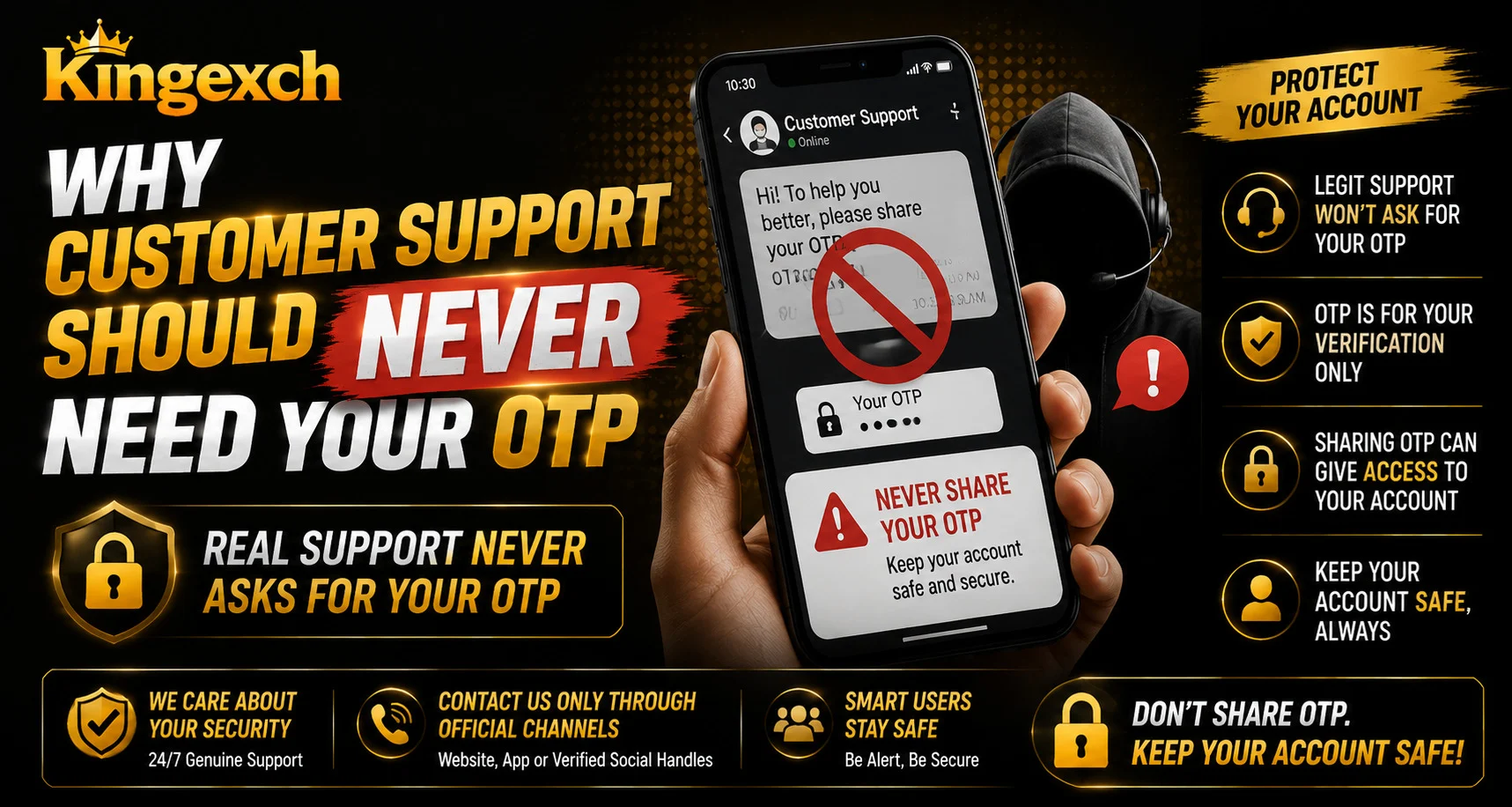
Introduction
Online accounts often use OTPs (One-Time Passwords) as an additional security layer to verify users during login, payments, or account recovery. While OTPs are designed to protect accounts, sharing them with another person can create serious security risks.
For users managing accounts through Kingexch or other online services, understanding OTP safety is important. Genuine customer support teams may help with account issues, but they should never ask users to reveal private verification codes. An OTP is meant for the account holder only.
What Is an OTP?
An OTP is a temporary security code sent to a registered mobile number, email address, or authentication application. It is usually required to confirm that the person accessing an account is the actual owner.
OTPs are commonly used for:
- Login verification
- Password recovery
- Account changes
- Payment confirmation
- Security checks
Because OTPs provide access confirmation, they should always remain private.
Why Customer Support Does Not Need Your OTP
Legitimate customer support teams already have official tools to verify account ownership. They do not need users to share security codes that are sent directly to them.
A genuine support representative may ask for:
- Account username or ID
- Registered email address
- Transaction reference number
- General account information
- Issue details
However, they should never request:
- OTP
- Password
- UPI PIN
- ATM PIN
- Card security code
Your OTP confirms access to your account, so sharing it can put your information at risk.
How OTP Scams Usually Work
Scammers often pretend to be customer support representatives to trick users into sharing verification codes.
Common scam methods include:
- Fake support calls
- Fake messages
- Phishing websites
- Social media impersonation
- Urgent account problem claims
A scammer may say:
- “Your account has a security issue”
- “We need your OTP to verify you”
- “Your payment will fail unless you confirm this code”
- “We need access to fix your account”
These requests are warning signs.
What Happens If You Share Your OTP?
Sharing an OTP can allow someone else to complete a verification process connected to your account.
Possible risks include:
- Unauthorized login attempts
- Account access issues
- Personal information exposure
- Unwanted account changes
- Payment-related risks
Even if someone claims to be from customer support, OTPs should never be shared.
How to Identify Genuine Support
Before communicating with support, confirm that you are using an official contact method.
Check:
- Official website details
- Verified support channels
- Registered email addresses
- Help centre information
- In-platform support options
Avoid contacting unknown numbers or responding to random messages claiming to represent a service.
Users checking King Exchange 9 support options should always use official channels and avoid sharing confidential security details.
What To Share Instead of OTP
If you need help with an account issue, provide information that helps support teams investigate without compromising security.
Safe details may include:
- Account ID
- Transaction number
- Payment date
- Error message
- Screenshot without private credentials
- Description of the issue
Always remove sensitive information before sharing screenshots.
Protecting Your Account From OTP Fraud
Good security habits can reduce the risk of OTP scams.
Follow these steps:
- Never share OTPs with anyone
- Avoid clicking unknown links
- Use strong passwords
- Enable additional security features
- Check website addresses carefully
- Contact support through official channels
- Monitor account activity regularly
Small precautions can prevent major account security problems.
Why Users Should Stay Alert During Payment Issues
Payment-related problems can make users more likely to trust urgent requests. Scammers often use failed payments, blocked accounts, or verification issues as reasons to request OTPs.
During payment problems:
- Stay calm
- Check transaction status yourself
- Use official support
- Avoid sharing private codes
- Verify all communication
A genuine support team will help resolve problems without asking for confidential verification codes.
Responsible Account Security Practices
Protecting an account requires careful decisions from users. Security systems can only work effectively when login information and verification codes remain private.
Users should:
- Keep OTPs confidential
- Review account activity
- Use secure devices
- Avoid suspicious communication
- Follow official instructions
- Update passwords when needed
Anyone using King Exchange should treat account security as an important responsibility.
Conclusion
Customer support should never need your OTP because the code is designed only for the account owner. Sharing an OTP can give another person the ability to complete security verification and potentially access sensitive account information.
Always remember that genuine support teams will never ask for OTPs, passwords, UPI PINs, or other confidential security details. By keeping verification codes private and using official support channels, users can maintain better control over their accounts.
FAQs
Why should I never share my OTP?
An OTP is a private security code used to verify account ownership. Sharing it can allow someone else to access your account.
Can customer support ask for my OTP?
No. Genuine customer support teams do not need your OTP to verify or solve account-related issues.
What information can I share with support?
You can usually share account details, transaction references, error messages, and issue descriptions, but never confidential security codes.
What should I do if someone asks for my OTP?
Do not share it. End the conversation and contact the service through an official support channel.
Can scammers pretend to be customer support?
Yes. Scammers often impersonate support teams to collect OTPs and other private information. Always verify the source before responding.


